


This post contains affiliate links.
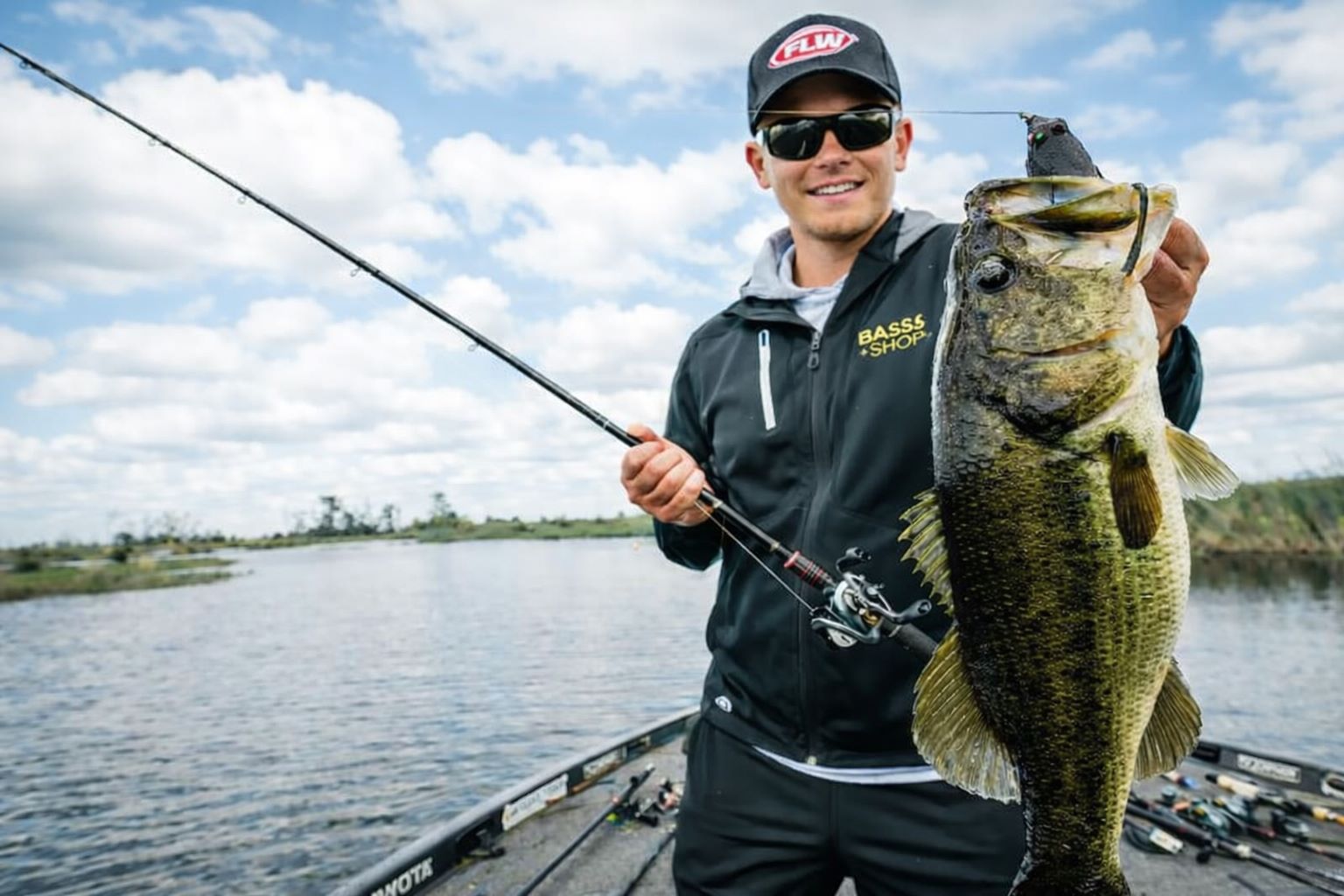
Bass fishing is one of the most exciting and accessible ways to get into fishing. It combines skill, strategy, and just enough unpredictability to keep every trip interesting. If you are new to fishing, bass are a perfect place to start because they are found in many lakes and rivers, they are aggressive feeders, and they can be caught with relatively simple gear.
This guide will walk you through everything you need to know in a clear and easy-to-follow way. By the end, you will understand how bass behave, what gear to use, where to fish, and how to actually catch them.
Understanding Bass Behavior
The key to catching bass is understanding how they think. Bass are not constantly swimming around looking for food. Instead, they act like ambush predators. They hide in places where they can wait for prey to come to them, then strike quickly.
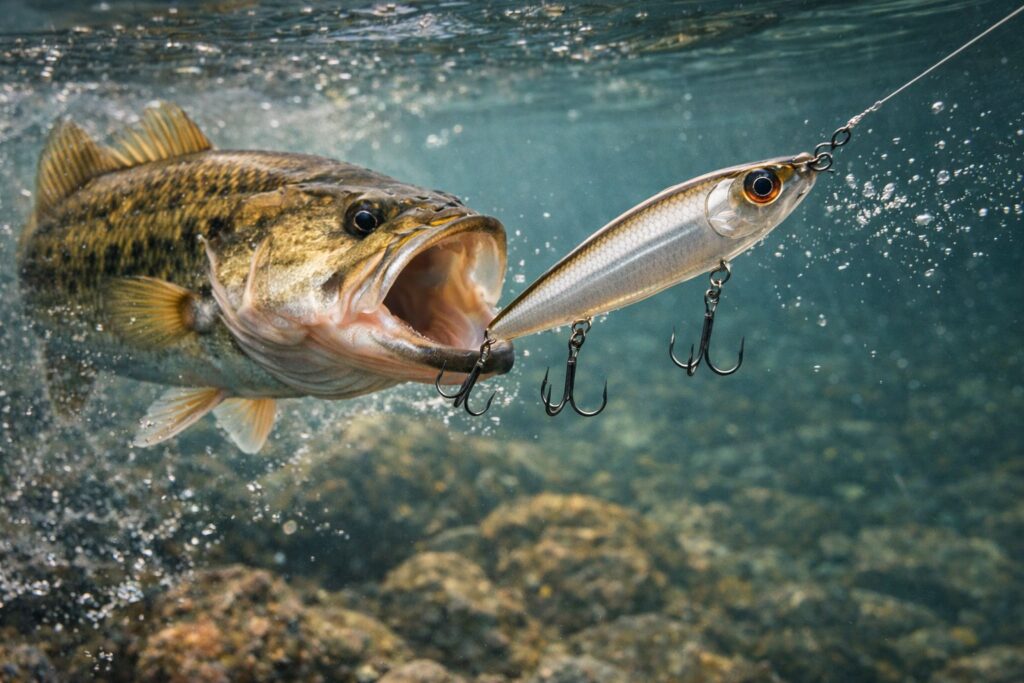
This means that bass are almost always near some type of cover. Cover includes things like weeds, rocks, fallen trees, docks, or anything else that provides shade and protection. When you are fishing, you should not be casting randomly into open water. You should be aiming near these structures because that is where bass are most likely waiting.
Water temperature also affects bass behavior. In colder water, bass slow down and tend to stay deeper. In warmer water, they become more active and move into shallower areas, especially during feeding times. Light plays a role as well. Bass prefer low light conditions, which is why early morning and late evening are often the best times to fish.
The Basic Gear You Need
Getting started with bass fishing does not require a lot of expensive equipment. In fact, keeping things simple will help you learn faster.
A spinning rod and reel combo is the best choice for beginners. It is easy to use, reliable, and works well for most bass fishing situations. Look for a rod that is around six to seven feet long with medium or medium-heavy power. Pair it with a spinning reel and use a fishing line in the range of ten to fifteen pounds.
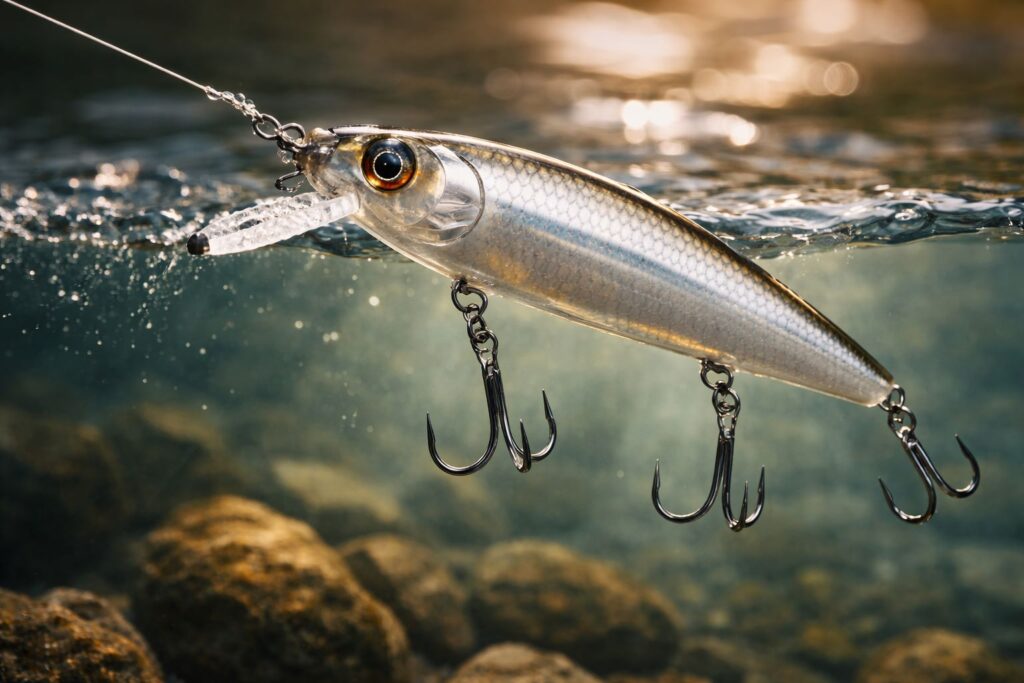
You do not need a huge tackle box filled with lures. Start with a few essentials. Soft plastic worms are one of the most effective and beginner-friendly options. Add a few hooks, some weights, and maybe one or two moving lures like a spinnerbait or crankbait. That is more than enough to get started.
As you gain experience, you can expand your gear, but in the beginning, simple is better.
The Best Lures for Beginners
Choosing the right lure can make a big difference, but it does not have to be complicated. A few proven lures will catch bass almost anywhere.
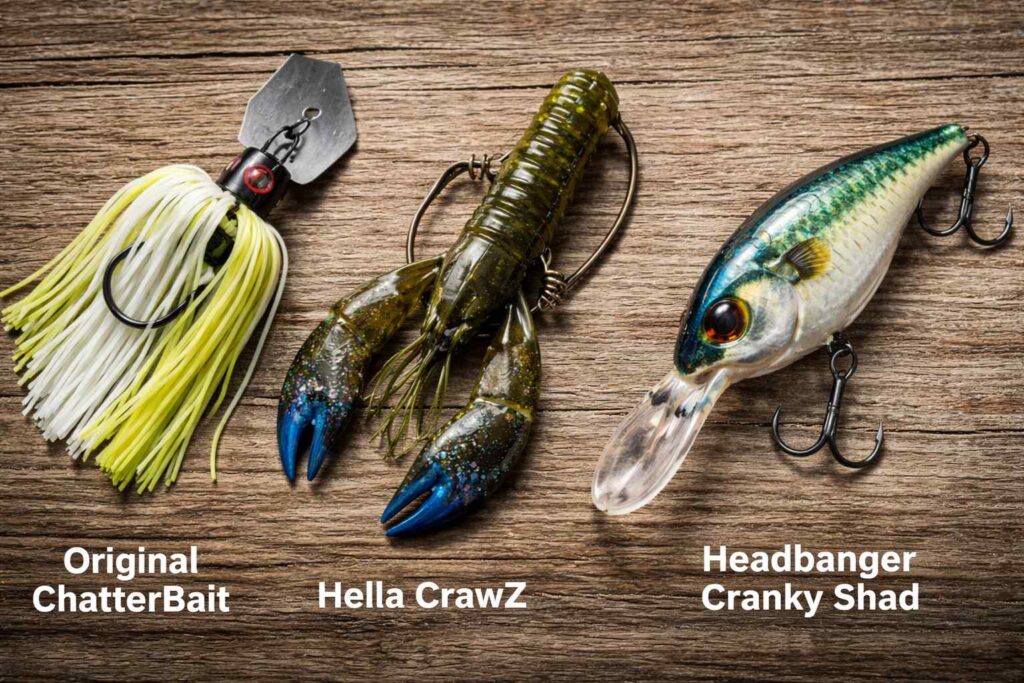
Soft plastic worms are one of the best choices for beginners. They are easy to use and extremely effective. The Texas rig is a popular way to set them up because it allows you to fish in heavy cover without getting snagged.
Spinnerbaits are another great option. They create vibration and flash in the water, which helps bass locate them even when visibility is low. They are also easy to use because you can simply cast and retrieve them at a steady pace.
Topwater lures are exciting and effective, especially during low light conditions. Watching a bass strike on the surface is one of the most thrilling parts of fishing.
Crankbaits are useful for covering water and finding active fish. They dive to specific depths and mimic small baitfish, making them a reliable option once you are comfortable with casting.
Where to Find Bass
One of the biggest mistakes beginners make is fishing in the wrong places. Finding bass is often more important than the lure you are using.
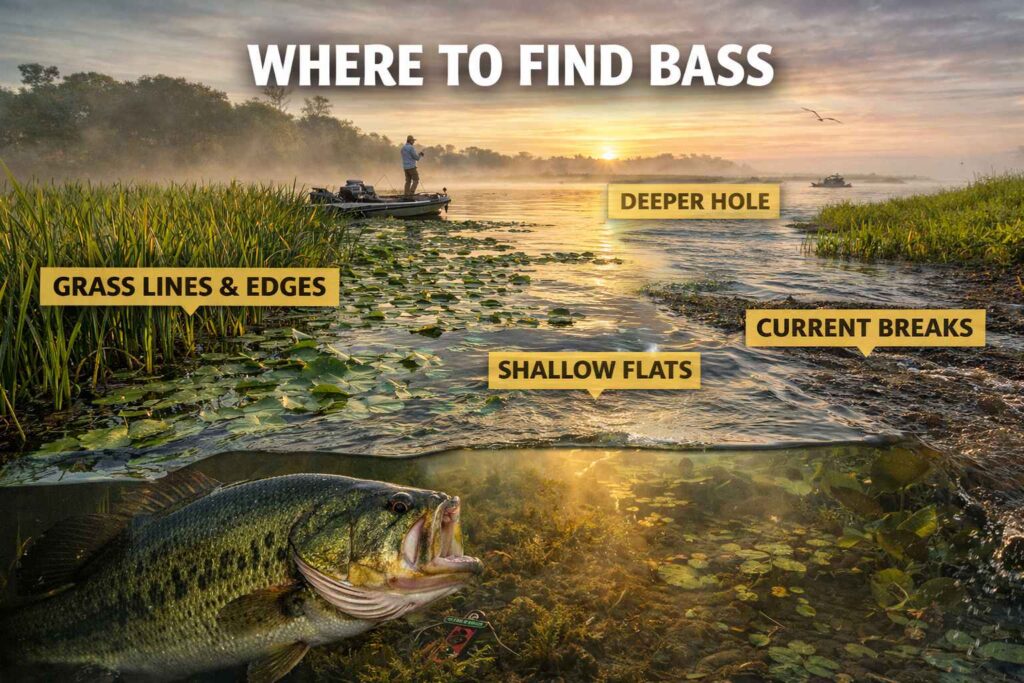
Look for areas with structure and cover. Docks, weed beds, fallen trees, and rocky shorelines are all prime locations. Bass use these areas to hide and ambush prey, so casting near them increases your chances of getting a bite.
If you are fishing from the bank, pay attention to changes in the shoreline. Points, corners, and areas where the water suddenly gets deeper are all good places to try. If you have access to a boat, you can explore deeper water and fish along submerged structures.
Bass often move depending on the time of day and the season. In the spring, they move into shallow water. In the summer, they may go deeper during the heat of the day. In the fall, they feed aggressively and can be found chasing baitfish.
How to Cast and Retrieve
Learning how to cast properly is one of the first skills you will need. It may feel awkward at first, but it becomes easier with practice. Focus on smooth, controlled movements rather than trying to cast as far as possible. Accuracy is more important than distance.
Once your lure is in the water, the way you retrieve it matters. A steady retrieve works well for many lures, but you can also experiment with pauses, twitches, and changes in speed. Bass often strike when the lure behaves like an injured or struggling prey.
Always pay attention to your line. Sometimes a bite is not a strong pull but a small twitch or movement. When you feel something unusual, set the hook by lifting your rod firmly.
The Best Time to Catch Bass
Timing plays a big role in bass fishing success. Early morning and late evening are usually the best times because bass are more active and feeding during these periods.
Cloudy days can also be very productive because the reduced sunlight allows bass to move around more freely. On bright, sunny days, bass often stay in shaded areas or deeper water.
Seasonal patterns are important as well. In the spring, bass are in shallow water for spawning. In the summer, they may move deeper to stay cool. In the fall, they feed heavily in preparation for winter, which can lead to some of the best fishing opportunities.
Common Mistakes Beginners Make
Many beginners make the mistake of overcomplicating bass fishing. You do not need a large collection of gear or advanced techniques to catch fish. Focus on learning the basics first.
Fishing too fast is another common issue. Slowing down your retrieve can make a big difference, especially when bass are not very active. Give them time to react to your lure.
Casting without a target is also a mistake. Instead of randomly casting, aim for specific areas like the edge of a dock or a patch of weeds. Being intentional with your casts will improve your success.
Another mistake is not paying attention to your line. Many bites are subtle, and if you are not watching closely, you can miss them.
Building Confidence on the Water
Confidence in bass fishing comes from experience. The more time you spend on the water, the more you will learn what works and what does not.
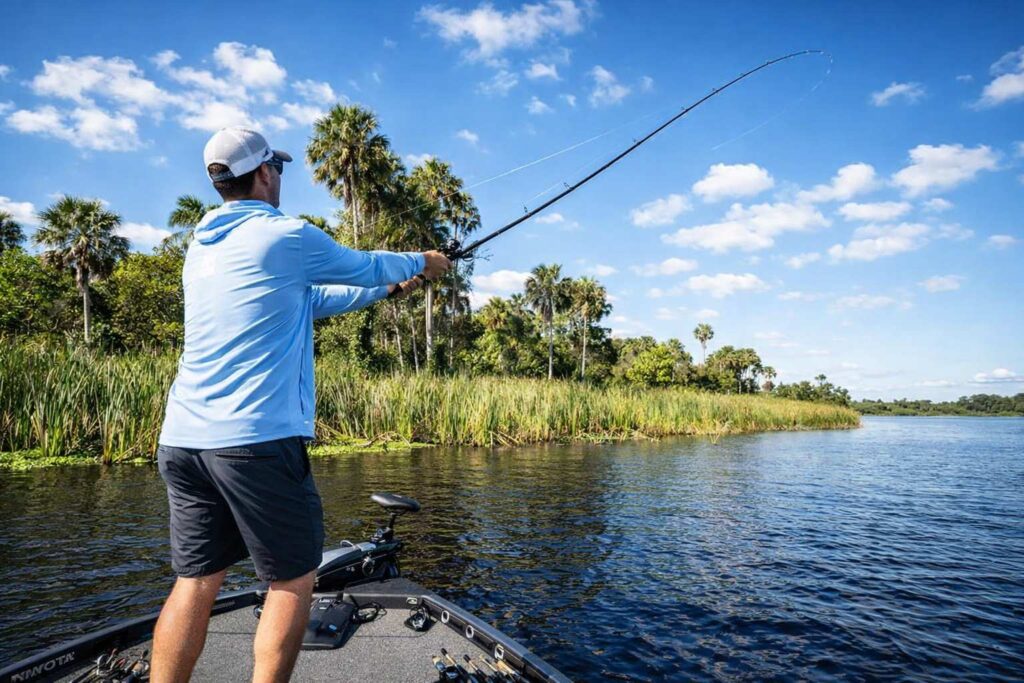
Start simple and focus on a few techniques. Pay attention to what happens each time you fish. If you catch a bass in a certain location or under certain conditions, try to repeat that pattern.
Fishing is not just about catching fish. It is also about learning and enjoying the process. Some days will be slow, and that is completely normal. Stick with it, and your skills will improve over time.
Final Thoughts
Bass fishing is a skill that anyone can learn with a little time and practice. You do not need expensive gear or complicated techniques to get started. Focus on understanding bass behavior, using a few reliable lures, and fishing in the right places.
The most important step is simply getting out there and fishing. Every cast is a chance to learn something new. Over time, those small lessons will add up, and you will become a more confident and successful angler.
If you stay consistent and keep things simple, you will start catching bass sooner than you think.
Bass Fishing for Beginners Guide
This post contains affiliate links.