

This post contains affiliate links.
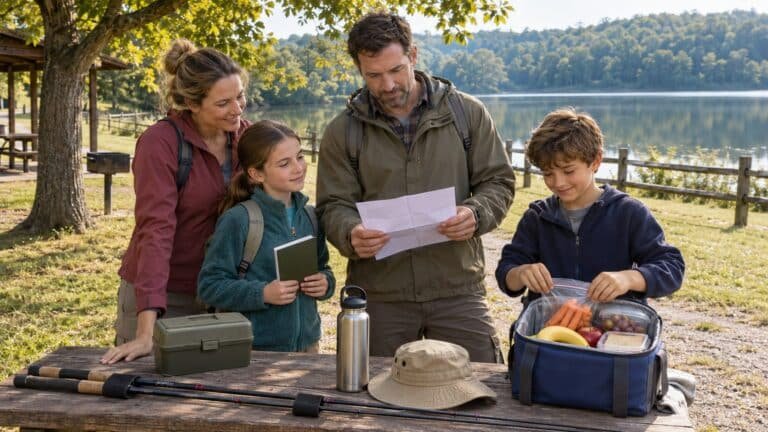
A family fishing day becomes easier when the small jobs have owners. Instead of asking one person to remember everything, give each willing participant a simple role. The aim is a comfortable outing together, with a plan that still works if nobody catches a fish.
Choose the Shape of the Day
Agree on a start time, a realistic stopping time and a location that fits the youngest or least mobile person in the group. Check access, current fishing requirements and any age-related licensing rules with the responsible agency. Do not assume a rule from a previous trip applies elsewhere.
Decide in advance whether the outing is mainly about learning, relaxing or spending time together. That choice helps prevent adults from turning a beginner’s first visit into a long performance test.
Give People Manageable Jobs
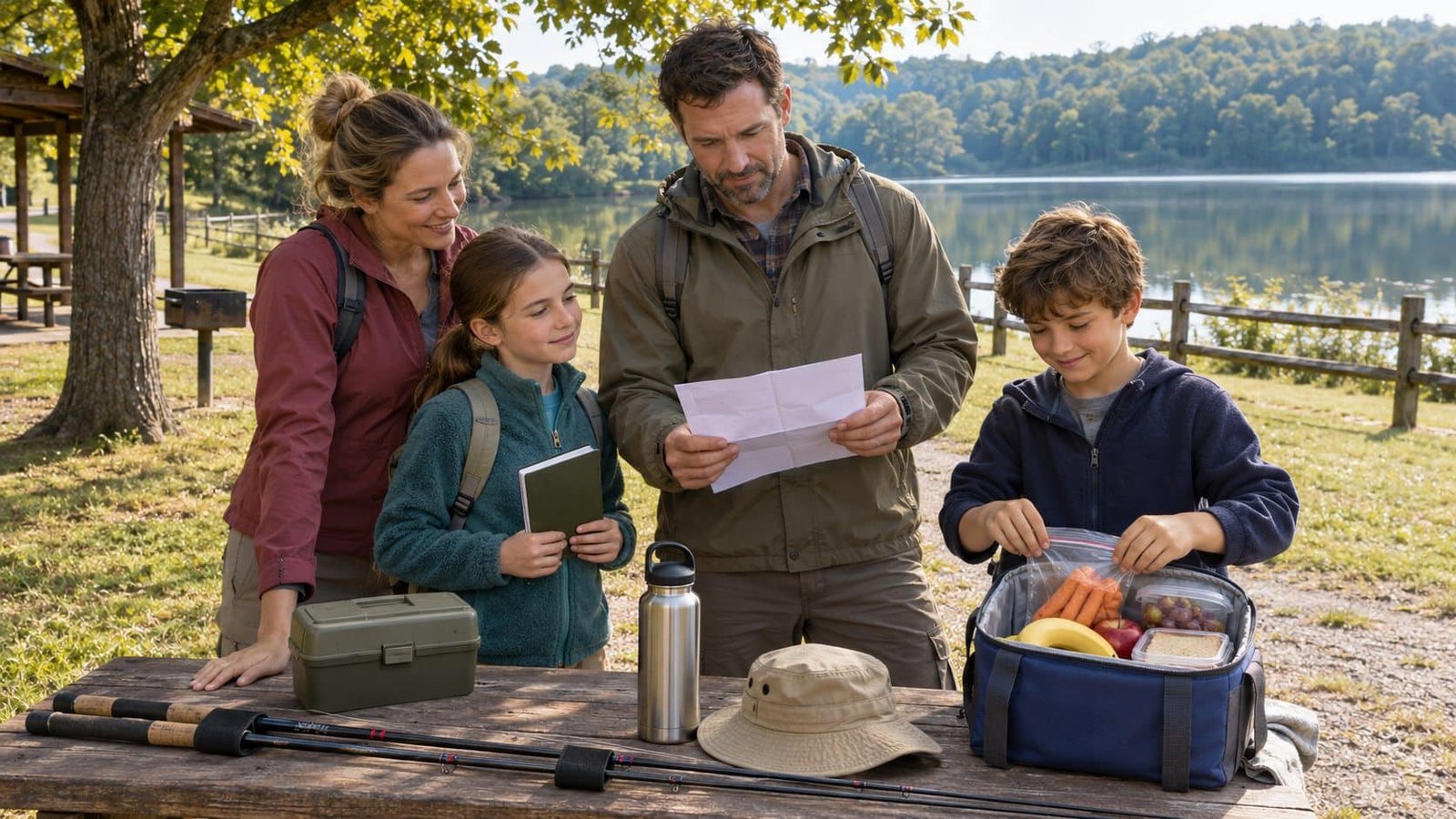
One adult can check the route and official rules. Another can organize food, drinking water and the return-home plan. A child who wants to help might count lunch containers or choose a notebook for trip observations. Adults retain responsibility for supervision, hooks, tools and water safety.
Use a checklist with three columns: task, person and checked. Do not assign a child a safety responsibility simply because the role sounds independent.
Pack Around Activities
Group familiar belongings by use: getting there, spending time at the spot, eating and tidying up. Keep sharp items secured and separate from food and casual play. Make sure the group’s arrangements meet the requirements of the setting, including appropriate life jackets where needed.
Include an activity for a pause: sketch the surroundings, watch birds from a distance or make a weather note. A break does not have to involve another purchase.
Agree on an Easy Finish
Tell everyone what will trigger an early departure, such as deteriorating weather, fatigue or an uncomfortable location. Identify real shelter before fishing and leave the water when conditions become threatening.
Before leaving, check the area for line, hooks and rubbish. At home, ask each person for one enjoyable moment and one thing to change. Those answers can shape the next outing better than the catch total.
Further guidance: National Weather Service trip-weather guidance.
Keep Exploring
This post contains affiliate links.